
Customer challenges
Routine inspections require significant staff time, especially at night.
Alerts still require staff to check the scene.
Hazardous-area inspections expose workers to risk.
Cameras and robots operate in separate systems.
Robots have limited visibility beyond onboard sensors.
Customer benefits
Reduce repetitive inspection and monitoring work.
Shorten incident verification and response time.
Reduce staff entries into hazardous areas.
Improve inspection coverage and record completeness.
Extend robot awareness through existing cameras.
Manage devices and tasks across sites in one platform.
Key features
Smart Inspection & Risk Detection
Runs scheduled inspections and checkpoint tasks with AI anomaly detection and alerts, and keeps inspection video, results and automatic inspection records.
Site Awareness & Coordinated Dispatch
Combines camera, IoT and robot data to provide environmental information beyond the robot's view, dispatches based on event location and device status, and supports on-site checks, audio announcements and human takeover.
Fleet & Incident Management
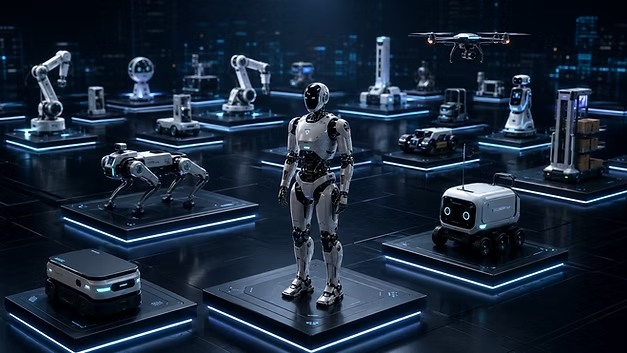
Integrates compatible robots and drones, monitors location, battery and task status, manages fleets centrally across sites, and retains event video with response tracking.
Before & after
| Before | After — with Linker AI Nexa |
|---|---|
| Before Staff perform scheduled patrols. | After — with Linker AI Nexa Robots carry out scheduled inspections. |
| Before Staff check the scene after alerts. | After — with Linker AI Nexa Robots are dispatched for on-site verification. |
| Before Robots rely on onboard sensors. | After — with Linker AI Nexa Site cameras provide additional awareness. |
| Before Devices are managed separately. | After — with Linker AI Nexa One platform manages devices and tasks. |
| Before Inspection reports are prepared manually. | After — with Linker AI Nexa Task and event records are compiled automatically. |