
Customer challenges
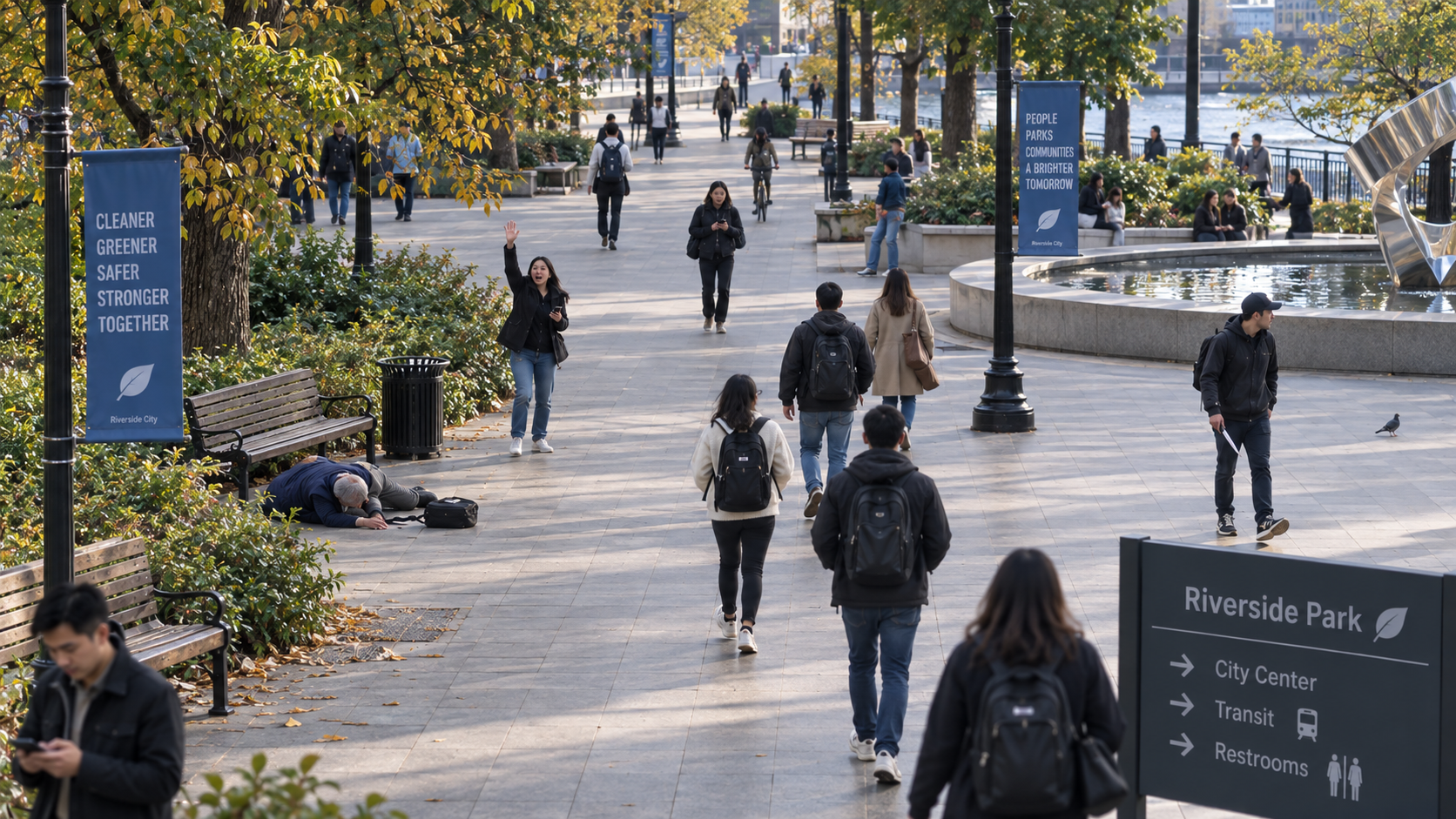
Falls and medical episodes in open public areas often go unseen until a passer-by reports them, and sparse staffing over large areas delays help; people in trouble in large open spaces can't reach staff, and manual CCTV monitoring can't watch every camera; and weapons in crowded public areas are hard to spot until an incident occurs, since manual monitoring is unreliable.
Customer benefits
Faster medical, emergency, and security response with reduced harm, deterrence, and stronger duty of care — through 24/7 coverage of large areas without more staff, improving public-safety confidence and the potential to prevent or reduce harm.
Key features
Incident Detection — Person Fall
Detects a person falling and raises an incident alert.
Distress Monitoring (waving)
Detects people waving for help or showing signs of distress.
Weapon Detection
Detects visible weapons in camera view and alerts security.
Before & after
| Before | After — with Linker AI Nexa |
|---|---|
| Before Falls, distress, and weapons are noticed only by chance — spotted when someone passes by, seen on monitored feeds, or reported by bystanders, and often only during or after an incident — so response is delayed. | After — with Linker AI Nexa Falls, distress gestures, and visible weapons are flagged automatically to the control room within seconds, with location for human review, so responders are dispatched in seconds. |